
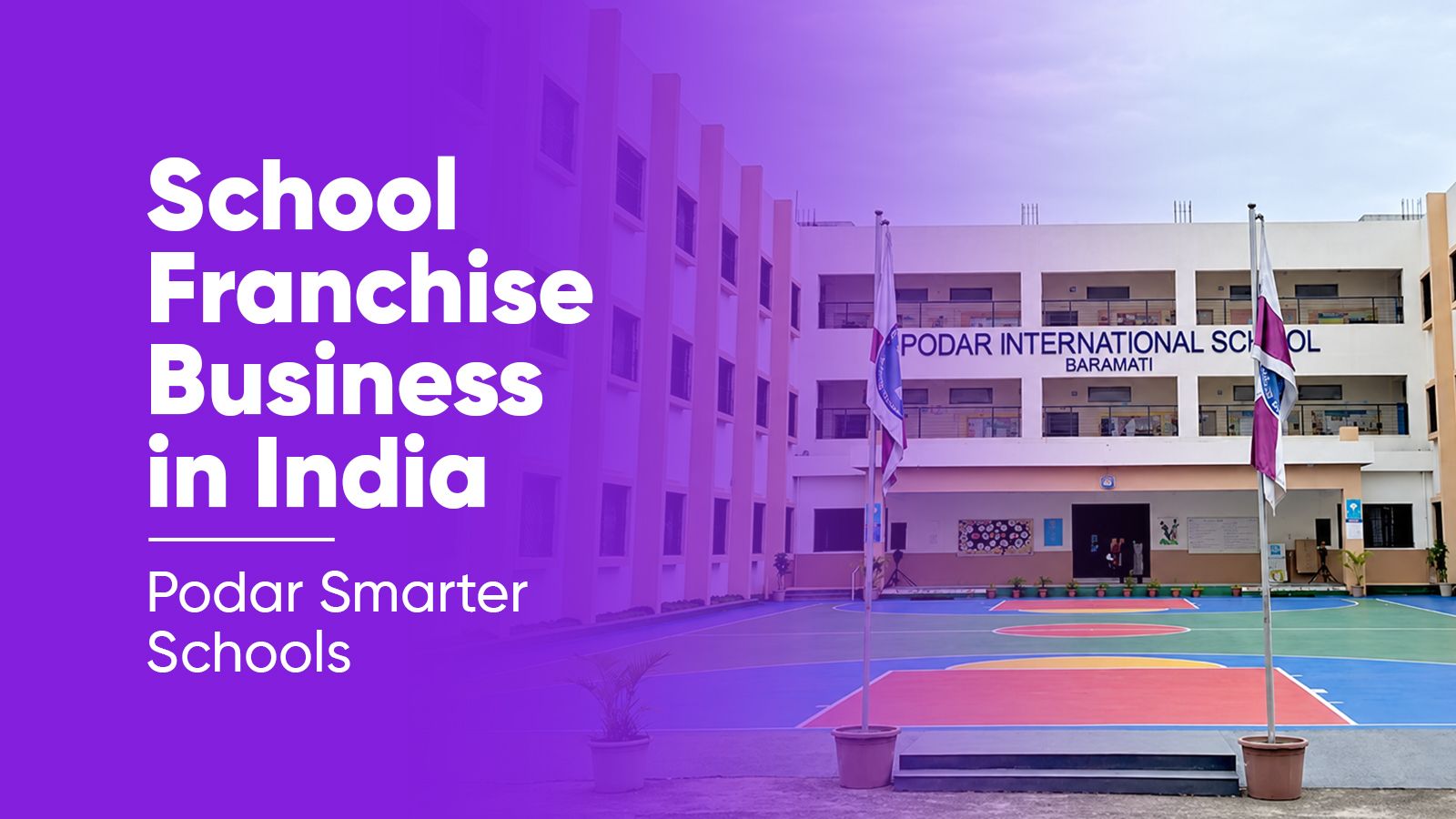
India’s education sector continues to evolve as families seek quality schooling, modern teaching methods, and opportunities for students’ overall development. For entrepreneurs, educational trusts, societies, and other eligible organizations, a school franchise business in India offers a structured way to establish a school with guidance from an established education organization.
Starting a school involves more than developing a campus. It requires academic planning, qualified teachers, suitable infrastructure, regulatory compliance, and consistent engagement with parents. Partnering with an established education brand provides access to academic resources, operational guidance, and a defined framework for school development.
The Podar Smarter School franchise offers a partnership opportunity for those interested in contributing to the education sector. With appropriate planning and a focus on educational quality, partners can work toward establishing a school that meets the needs of students and families in their community.
Why Is the School Franchise Sector Growing in India?
Demand for quality education is influenced by changing family expectations, urban development, and the need for learning environments that prepare students for future opportunities.
Several factors contribute to interest in school franchise opportunities:
- Demand for quality schooling: Parents look for structured academic programs and supportive learning environments.
- Growth in emerging cities: Tier II and Tier III cities present opportunities to assess local demand for schools.
- Holistic development: Families increasingly value extracurricular activities, communication skills, and practical learning alongside academics.
- Technology-enabled education: Digital learning resources and classroom technology support different teaching approaches.
- Education policy developments: The National Education Policy (NEP) 2020 provides a framework for educational reforms, including competency-based learning.
These factors make it important to evaluate local educational needs before planning a new school. The suitability of a location depends on factors such as the number of school-age children, existing schools, accessibility, infrastructure, and parents’ preferences.
What Is a School Franchise?
A school franchise is a partnership arrangement in which an organization operates a school using an education brand’s approved framework, subject to the applicable agreement and regulatory requirements.
Depending on the partnership model, the school partner may receive access to:
- Academic curriculum and learning resources
- School branding and communication guidelines
- Teacher recruitment and training guidance
- Academic planning and assessment frameworks
- Admissions and marketing assistance
- School management processes
- Technology-enabled learning resources
- Ongoing academic guidance
The scope of support varies by agreement. Before entering a school franchise arrangement, partners should understand their responsibilities, the support provided, the applicable fees, and the regulatory requirements for operating a school.
School Franchise Investment: What Should You Plan For?
Planning the school franchise cost in India requires an assessment of the proposed campus, location, infrastructure, and operational requirements. There is no single cost applicable to every school project.
The major cost components typically include the following.
1. Land and Building
Assess whether the project requires land acquisition, a lease, or the development of an existing property. The campus must meet applicable requirements for space, safety, accessibility, and educational use.
2. Classroom and Campus Infrastructure
Plan for classrooms, administrative offices, activity areas, sanitation facilities, libraries, and other spaces required for the proposed school.
3. Educational Equipment
Budget for furniture, teaching materials, laboratory equipment where applicable, library resources, and classroom technology.
4. Staffing and Training
Account for teacher salaries, administrative staff, recruitment, induction, and ongoing professional development.
5. Technology and Operations
Consider school management software, digital learning resources, communication systems, utilities, maintenance, and other recurring operating expenses.
6. Marketing and Admissions
Plan for local outreach, digital marketing, parent interaction programs, school events, and admissions-related communication.
7. Working Capital and Contingencies
Prepare a financial plan covering the initial operating period, expected expenses, admissions timelines, and contingency requirements.
Before finalizing the project, prepare a detailed budget that separates one-time setup expenses from recurring costs. Review the assumptions regularly and account for variations in enrollment, staffing, and operating expenses.
Step-by-Step Process to Start a School Franchise
Establishing a school requires coordination across planning, infrastructure, academics, staffing, and compliance. The following steps provide a practical framework.
Step 1: Conduct Market Research
Study the local population, the number of school-age children, competing schools, transport access, and parent expectations. Identify the educational needs that the proposed school intends to address.
Step 2: Understand the Franchise Partnership
Contact the Podar Smarter School team to understand the partnership model, eligibility criteria, responsibilities, applicable costs, and available support. Review the proposed agreement before making commitments.
Step 3: Build the School
Develop an infrastructure plan based on the proposed grades, expected student capacity, local requirements, and the agreed school model.
Depending on the school's requirements, the campus plan may include:
- Classrooms and activity rooms
- Library and learning resource areas
- Laboratories, where applicable
- Sports and recreational facilities
- Administrative offices
- Sanitation and safety facilities
- Digital learning spaces
Ensure that the proposed premises and facilities comply with applicable local regulations and the requirements of the relevant education authorities.
Step 4: Plan the Academic Framework
Establish the academic calendar, curriculum implementation plan, learning resources, assessment processes, and student development activities. Coordinate with the education partner to understand the academic framework and implementation responsibilities.
Step 5: Recruit and Train Teachers
Recruit qualified educators and administrative staff according to the school's needs and applicable requirements. Organize induction and professional development so that teachers understand the academic approach, classroom expectations, and student support processes.
Step 6: Prepare for Marketing and Admissions
Develop an admissions plan that communicates the school's educational approach, facilities, curriculum, and student development activities.
Suitable activities include:
- Local community outreach
- Digital marketing campaigns
- Parent orientation sessions
- Campus visits and school events
- Informational materials for prospective families
Ensure that all promotional claims accurately reflect the school's facilities, approvals, and services.
Step 7: Prepare for the School Launch
Before opening, review staffing, infrastructure, safety arrangements, academic resources, admissions processes, and required approvals. Establish processes for monitoring teaching quality, communicating with parents, and addressing operational issues.
Why Partner with Podar Smarter School?
Selecting an education partner involves assessing its academic approach, partnership terms, operational guidance, and suitability for the proposed location.
The Podar Smarter School franchise provides a framework for prospective partners to explore school development with an established education organization. Before proceeding, partners should discuss the following areas with the team:
- Academic framework: Understand the curriculum approach, learning resources, and academic expectations.
- Teacher development: Clarify the training and professional development support available to educators.
- Admissions and communication: Review the guidance available for introducing the school to local families.
- School operations: Understand the processes and resources provided for day-to-day school management.
- Technology integration: Evaluate the digital learning and school management resources included in the partnership.
- Quality monitoring: Establish how academic progress, school operations, and parent feedback will be reviewed.
Podar's experience in education provides a starting point for discussing the proposed school's requirements and the support available under the partnership. Prospective partners should confirm the specific services, obligations, and applicable terms directly with the organization.
Growth Opportunities for a School Franchise
The development of a school is a long-term undertaking that requires attention to educational quality, community needs, and responsible management.
A school can strengthen its position in the local community through:
- Consistent teaching quality and student support
- Clear communication with parents
- Qualified and engaged teachers
- A safe and well-maintained campus
- Meaningful extracurricular activities
- Regular reviews of academic progress
- Thoughtful planning based on local educational needs
Future development depends on factors such as admissions, fee structures, operating expenses, staffing, and the quality of school management. Any expansion should be considered only after evaluating the school's requirements, available resources, and applicable regulations.
Who Can Explore a School Franchise?
A school franchise partnership may be relevant to different groups, subject to the education partner's eligibility criteria and applicable regulations.
These include:
- Entrepreneurs interested in education
- Educational trusts and societies
- Organizations with experience in community development
- Real estate groups evaluating suitable educational properties
- Existing school management organizations
- Business groups exploring education-related initiatives
Prior experience in education, property availability, financial capacity, and eligibility requirements should be discussed with the franchise team. The suitability of each applicant depends on the proposed project and the partnership's conditions.
Conclusion
Starting a school franchise business in India requires careful planning, an understanding of local educational needs, suitable infrastructure, qualified teachers, and compliance with applicable regulations. An established education partner can provide a framework for planning academic programs, preparing staff, organizing admissions, and managing school operations.
The Podar Smarter School franchise offers prospective partners an opportunity to explore school development with an established education organization. The next step is to understand the partnership requirements, assess the proposed location, and prepare a school development plan that prioritizes educational quality and the needs of families.
Enquiry Form
We request you to provide us your details in the below form and our representatives will get in touch with you at the earliest.
You can also contact us on the following numbers:
Maharashtra & Rest of India: 9930962227 Karnataka: 7506932440 / 7517690970
Madhya Pradesh: 8976715408 Gujarat: 8425817555 / 8657950372
Interested in Starting a School?
Thinking about starting a school with Podar Smarter School? Contact the Podar Smarter School team to discuss your proposed location, understand the partnership requirements, and explore the next steps.
Call us on 9930962227 or fill in the enquiry form on the website, and our team will get back to you.
